Kinetix Robotic Hand
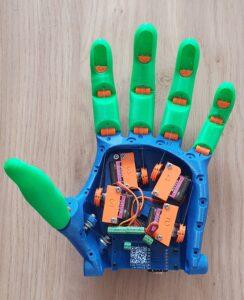
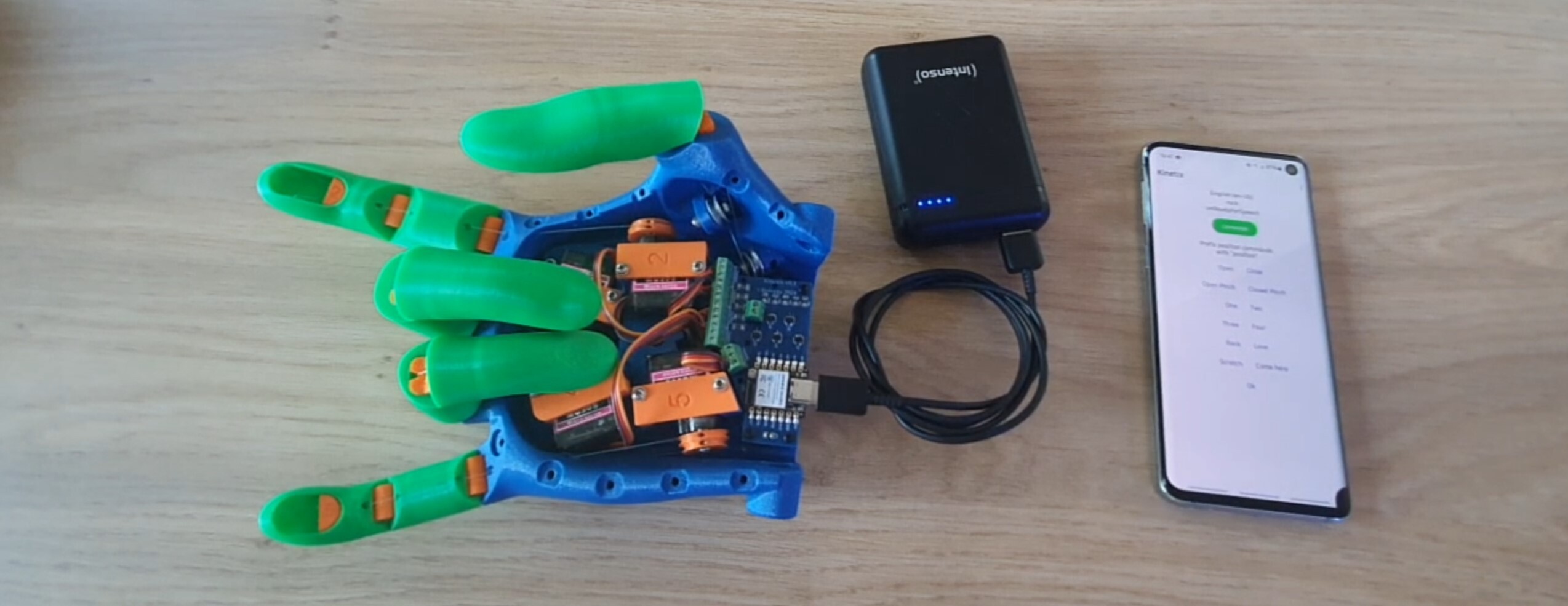
The Kinetix hand is an open-source project that aims to motorize the Kinetic hand in order to explore new robotic assistance solutions.
All project files are freely available on GitHub:
https://github.com/reivaxy/kinetix
Detailed documentation for building the project is also available in French:
https://github.com/reivaxy/kinetix/wiki
This project stands out for its very low cost and a design intended to be accessible to all makers. However, manufacturing the electronic board (sourcing components, soldering, testing) requires a minimum level of experience and equipment that not everyone has.
But what prostheses are actually available today?
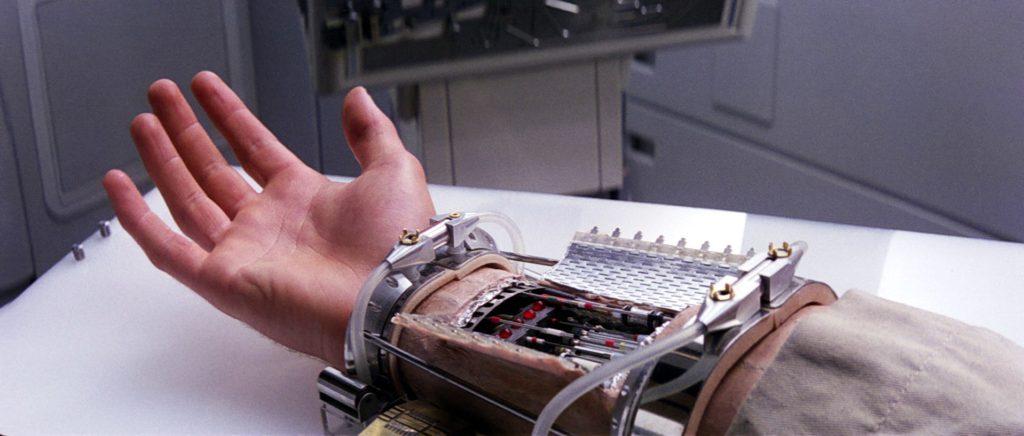
Let’s dispel a myth perpetuated by the film industry right away: prosthetics directly connected to the nervous system do not exist commercially. All devices currently available on the market are described as “non-invasive”: they do not penetrate under the skin or inside the body, and the higher-end models rely on sensors placed on the skin to understand the commands given to them.
Prostheses are currently divided into four categories
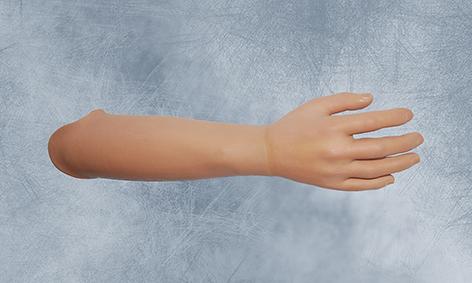
Social prosthesis: a sleeve into which I slide my forearm, and at the end of which is a fixed, artificial hand. Often very realistic, they serve to conceal the disability. They are difficult or impossible to adapt for people with complex palm agenesis or agenesis affecting one or more fingers. They deprive their users of touch, heat, and cold.
Mechanical Prosthesis
- The mechanical medical prosthesis consists of a spring-loaded gripper that must be operated with the other hand. It resembles a hand.
- The e-Nable mechanical prosthesis resembles a superhero’s hand and is operated by wrist or elbow movement, depending on the situation. All the fingers close simultaneously, providing a very useful gripper for everyday use.
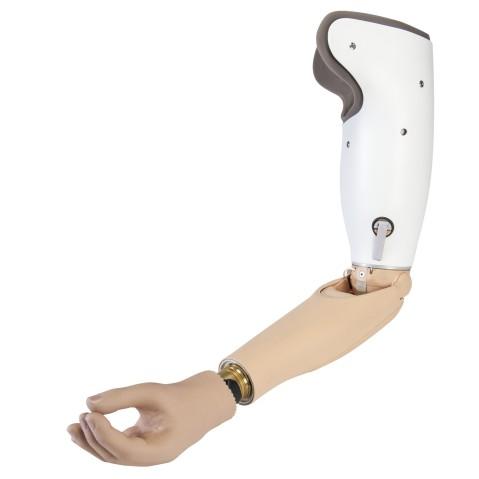
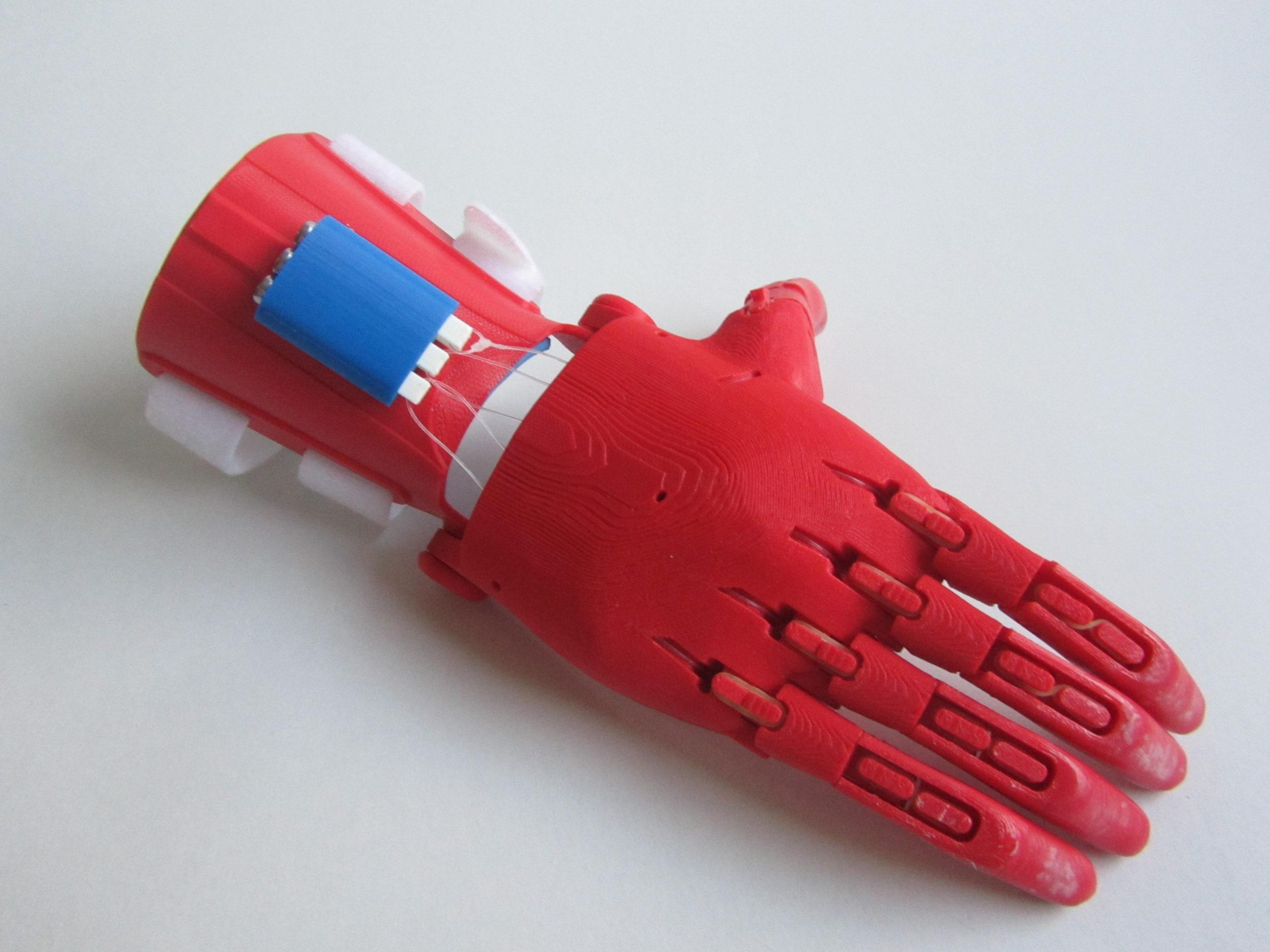
Myoelectric prosthesis: This is a motorized device that uses sensors to detect muscle commands and translate them into hand movements.
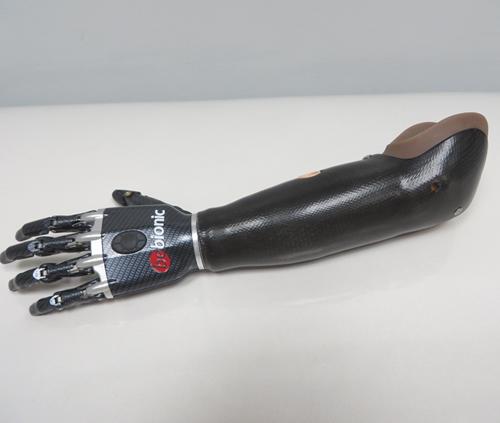
Bionic prosthesis: this is a myoelectric prosthesis but the wearer has undergone surgery to move nerves and/or muscles to make receiving commands easier.
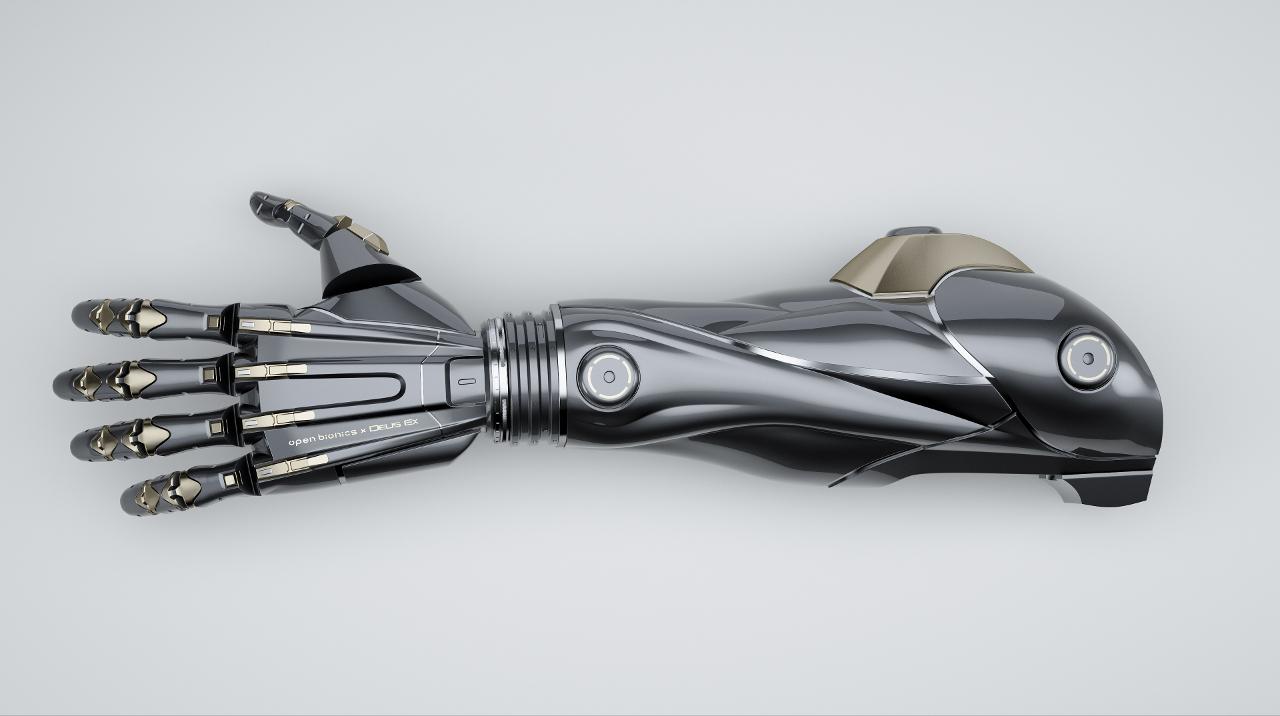
The solution that e-Nable France is working on is the Kinetix robotic hand.
The e-Nable France project
An e-Nable France Initiative
To facilitate access to this project and encourage experimentation, e-Nable France is offering, under certain conditions and while kits are available, a Kinetix kit to a select group of motivated makers. The kit includes:
- a pre-assembled and tested electronic board with pre-loaded firmware,
- servos, and
- small accessories (screws, nuts, washers, and metal pulleys).
This offer is reserved for validated e-Nable Makers registered with the e-Nable Robotics – France group.
Expected Project Objectives
Obtaining a kit is part of an initiative to improve or explore alternative solutions related to motorized assistance devices.
Examples (non-exhaustive list):
- sensor testing (motion triggering, pressure detection, etc.),
- improvement of control applications (Android and iOS),
- limiting voice recognition to the owner’s voice only (AI, etc.),
- experimentation with actuators or haptic feedback systems,
- innovative control devices,
- control algorithms, with or without artificial intelligence,
- new wrist fixation solutions,
- simplification or redesign of joints,
- study of multi-degree-of-freedom solutions,
- resizable device,
- wire tension adjustment device, etc.
Open-source publication of results is strongly encouraged.
Participation Guidelines
Step 1 – Project Presentation
Send a message to contact@e-Nable.fr clearly describing your project and objectives. This step allows you to receive preliminary approval for the provision of a kit, subject to availability.
Step 2 – Printing the Parts
After approval, you have one month (during which a kit will be reserved for you) to print all the parts of the hand. A photo of the printed parts must be sent to contact@e-Nable.fr.
Step 3 – Kit Delivery
The kit will then be sent to you. It includes the servomotors and the electronic board, assembled, programmed, and tested by us.
Step 4 – Project Promotion
A video (and possibly photos) of the hand in operation must be sent to contact@e-Nable.fr, with permission to share it on the association’s social media.
Step 5 – Sharing results
If your work leads to results that you consider relevant, we strongly encourage you to publish them as open source (GitHub, Thingiverse, Printables, MakerWorld, etc.).